At Taylor Overhead Door, we supply garage door systems and components to professional installers across the Dallas-Fort Worth metroplex. Over the years, we’ve learned what separates a smooth installation from one that generates callbacks.
The contractors we work with tell us the same thing. Homeowners call them three days after installation, worried something’s wrong. The door won’t close evenly. The smart opener keeps disconnecting. Weird grinding noise that wasn’t there when the crew left.
Here’s what most people don’t understand about garage door installations. Even when done perfectly by a skilled contractor, these systems need minor adjustments during the first few weeks. The building settles. Texas weather does its thing. Metal expands and contracts.
We put this guide together based on feedback from the professional installers we supply. These are the field issues they see most often after installation, plus the quick fixes that solve them. Some you can handle yourself. Others need a qualified contractor with the right tools.
Whether you’re a homeowner with a new overhead door Dallas installation or a property manager overseeing commercial facilities, understanding these common issues helps you know when to troubleshoot and when to call the professional who installed your system.
Uneven Door Closing After Installation
Your contractor finished the installation. Everything worked perfectly during the final inspection. Now one side of the door hits the ground before the other.
This is the number one callback issue contractors tell us about. And it’s almost never about poor installation quality.
Foundation Movement in DFW Climate
North Texas soil shifts constantly. Your concrete slab moves microscopically when temperatures swing from 40 degrees at sunrise to 95 degrees by afternoon. The garage door tracks, mounted perfectly plumb during installation, shift slightly as the building moves.
Professional installers account for this, but they can’t predict exactly how your specific foundation will behave in the first month. A simple track alignment check usually fixes the issue.
If you’re comfortable with basic tools, check the vertical tracks with a level. Both should be perfectly plumb. If one’s off by more than a quarter inch, the mounting bracket bolts can be loosened, the track tapped into alignment, then retightened. Many homeowners handle this themselves, but if you’re uncertain, contact your installer.
Photo-Eye Sensor Alignment
The safety sensors we supply to contractors are extremely sensitive by design. They prevent the door from closing if anything interrupts the invisible beam between the two units.
These sensors sit about six inches off the floor. A bumped garage storage bin, a misplaced bicycle, even vibration from normal door operation can knock them slightly out of alignment. If both sensor lights aren’t solid, they can’t see each other. Gently adjust the bracket on either side until both lights stay steady.
Excessive Noise During Operation
A properly installed dfw garage door system should run relatively quietly. If your new door sounds like it’s tearing itself apart, something needs attention before minor friction becomes major component wear.
Lubrication Requirements in Texas Heat
The garage door components we distribute come with factory lubrication. The problem? DFW garages regularly hit 120 degrees in summer. That heat breaks down lubricants faster than you’d see in milder climates.
Professional contractors know this. Many will mention it during the final walkthrough. Apply silicone-based lubricant or white lithium grease to all moving parts every three months. Hit the rollers, hinges, and spring bearing plates.
Avoid WD-40 or similar penetrating oils. They’re not lubricants and they attract dust, which creates an abrasive paste that accelerates wear on the quality components your installer used.
Looking for reliable parts, hardware, and expert solutions for every garage door project? Explore our complete guide to Overhead Garage Door Supply in Dallas Fort Worth (DFW), Texas to find the right products and support for smooth installations and repairs.
Hardware Loosening from Normal Vibration
Every time your garage door cycles, metal vibrates. Over hundreds of cycles in the first few weeks, bolts and nuts can work loose. This isn’t an installation defect. It’s basic physics.
A quick walk-around with a socket wrench solves most rattling noises. Tighten the track bracket bolts, roller stems, and hinge fasteners. Takes about fifteen minutes and eliminates the majority of noise complaints contractors hear after installation.
Smart Opener Connectivity Problems
The garage door openers we supply to contractors in 2025 come with smartphone connectivity as standard equipment. When it works, homeowners love the convenience. When it doesn’t, they blame the installer.
Most connectivity issues have nothing to do with installation quality. They’re Wi-Fi problems.
Wi-Fi Signal Challenges in Garage Environments
Garages are basically metal boxes designed to block signals. The opener connects fine during installation when the contractor’s standing right there with their phone. Then it loses connection randomly over the following days.
The issue? Most residential routers don’t push strong 2.4 GHz signals through concrete walls and metal garage doors. Add interference from neighboring networks in dense Dallas-Fort Worth neighborhoods, and you’ve got intermittent connectivity.
A basic Wi-Fi range extender positioned between the main router and garage solves this permanently. Not an expensive fix, and it works better than relocating the router or upgrading the opener.
Firmware Updates and System Stability
The manufacturers whose openers we distribute released significant firmware updates throughout 2024 and early 2025. These updates addressed security vulnerabilities and improved battery backup functionality. When the app prompts for an update, install it. Five minutes now prevents hours of troubleshooting later.
Spring Balance Issues Requiring Professional Service
This is where we need to be extremely clear. Torsion springs are dangerous. They store tremendous energy under constant tension. Adjusting them requires specialized tools and training.
The professional contractors we supply know this. They’ve invested in proper spring winding bars and safety equipment. They understand the physics involved.
Why Spring Work Isn’t DIY
If your door won’t stay open halfway, closes too fast, or the opener motor strains during operation, you likely have a spring tension issue. Do not attempt to adjust torsion springs yourself, even if you find instructions online.
Every year, contractors tell us about homeowners who tried adjusting their own springs and ended up injured or with a completely non-functional door. The springs we supply to professional installers can exert hundreds of pounds of force. One slip with an improvised tool causes serious damage.
Contact the contractor who installed your system. They have the right equipment and know-how to adjust spring tension safely. This typically takes them less than 30 minutes and costs far less than emergency medical care or a completely destroyed door.
Weather Seal Performance and Energy Efficiency
The insulated garage doors we supply to DFW contractors deliver real energy savings when properly sealed. But those benefits disappear if weather seals aren’t correctly positioned.
Bottom Seal Contact Issues
The rubber seal along the door’s bottom edge should compress evenly when closed. Gaps allow conditioned air to escape and outdoor air to infiltrate your garage, undermining the insulation value of the door itself.
Most bottom seals slide into a retainer channel. Sometimes they shift during the first few days of operation. The seal can be loosened, repositioned to make full contact with the floor, then secured. This is typically straightforward enough for homeowners to handle.
Perimeter Seal Inspection
The weatherstripping along the sides and top of the door frame prevents water intrusion during North Texas thunderstorms. These seals should sit firmly in their tracks. If you feel air movement along the edges when the door is closed, the seals may need adjustment or replacement. Your installer can assess whether repositioning solves the issue or if the seals themselves have a defect.
Remote Control and Wall Button Responsiveness
Intermittent response to remote controls frustrates homeowners and generates service calls for contractors. Before assuming the opener or remote is defective, check a few common issues.
Battery Quality and Electrical Connections
The remote controls that ship with the openers we distribute sometimes include batteries that are already partially discharged from sitting in warehouses. Fresh batteries from a retail pack solve most range problems.
For wall-mounted button issues, check the wire terminals on the opener motor unit. Installation crews don’t intentionally leave these loose, but vibration over several days can work connections loose. Tightening the terminal screws takes seconds.
LED Interference Problems
This catches people off guard. Inexpensive LED bulbs generate radio frequency interference that blocks remote signals. The solution? Garage door opener-rated LED bulbs cost slightly more but eliminate this interference entirely. Contractors familiar with this issue sometimes mention it during installation, but many homeowners don’t make the connection until they’re troubleshooting remote problems.
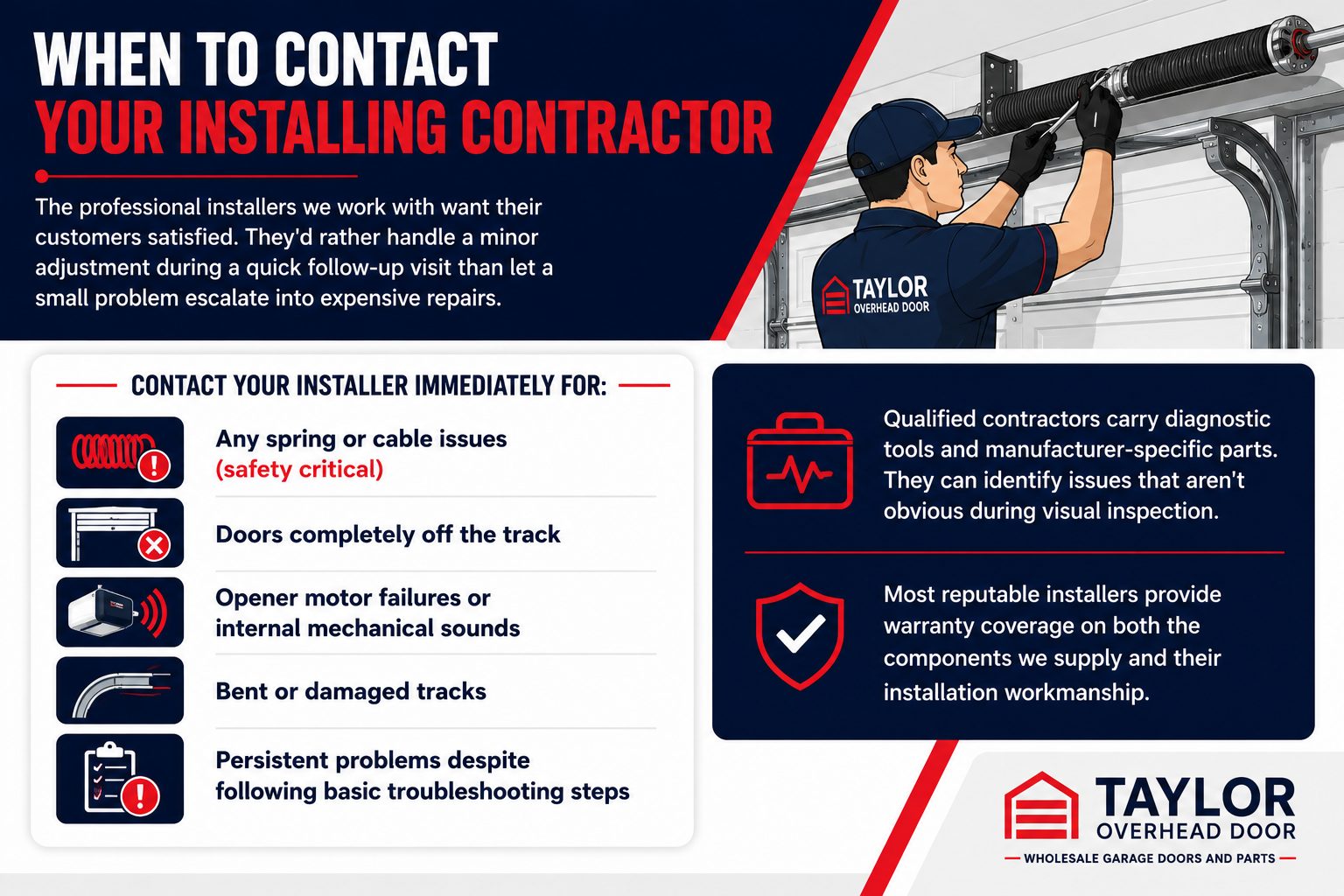
When to Contact Your Installing Contractor
The professional installers we work with want their customers satisfied. They’d rather handle a minor adjustment during a quick follow-up visit than let a small problem escalate into expensive repairs.
Contact your installer immediately for:
• Any spring or cable issues (safety critical)
• Doors completely off the track
• Opener motor failures or internal mechanical sounds
• Bent or damaged tracks
• Persistent problems despite following basic troubleshooting steps
Qualified contractors carry diagnostic tools and manufacturer-specific parts. They can identify issues that aren’t obvious during visual inspection. Most reputable installers provide warranty coverage on both the components we supply and their installation workmanship.
Common Questions About New Garage Door Installations
How quickly should installation problems be reported?
Contact your installer as soon as you notice something unusual. Small problems addressed within the first week are typically quick fixes. The same issues left unaddressed for months can develop into component failures requiring expensive repairs. Most contractors appreciate early notification so they can address concerns while the installation is fresh.
Why does door performance change between morning and afternoon?
Temperature affects metal expansion and spring characteristics. Dallas-Fort Worth garages can reach 120 degrees by mid-afternoon in summer. This thermal expansion changes component dimensions and reduces spring tension. Quality installations account for normal temperature variation, but extreme performance differences might indicate springs that need minor adjustment.
Can smart technology be added after basic opener installation?
Yes. The major opener brands we supply to contractors offer retrofit smart controllers compatible with units manufactured after 2015. Your installer can add smartphone connectivity, automatic scheduling, and notification features to most existing openers. Installation typically takes about an hour and costs significantly less than complete opener replacement.
What’s the recommended lubrication schedule?
Quarterly maintenance is ideal for DFW climate conditions. Apply silicone-based or lithium-based lubricant to all moving parts every three months. More frequent lubrication may be necessary for doors in constant use or when increased noise indicates friction. Avoid petroleum-based products that attract dust and create abrasive buildup.
What does the installation warranty typically cover?
Warranty coverage varies by contractor and component manufacturer. The garage door systems and parts we supply come with manufacturer warranties covering defects. Your installing contractor should provide separate coverage on their installation workmanship. Review warranty documentation carefully and keep it accessible. Report potential warranty issues promptly to ensure coverage.
Is professional annual service necessary for new installations?
Annual professional inspection extends system lifespan significantly. During maintenance visits, qualified technicians check spring tension, test all safety features, inspect cables for early wear signs, and thoroughly lubricate components. This preventive approach catches developing problems before they cause system failure. Well-maintained garage doors regularly last 25 years compared to 15 years without professional service.
How do commercial installations differ from residential?
Commercial garage doors experience far more daily cycles than residential systems. A commercial facility might operate the door 30 or more times daily versus a home’s typical 3-4 cycles. We supply contractors with commercial-grade components including heavy-duty springs, reinforced tracks, and high-cycle rated openers designed for constant use. Property managers should schedule quarterly professional inspections rather than annual service.
Working With Quality Contractors Makes the Difference
At Taylor Overhead Door, we’ve built relationships with professional garage door installers throughout the Dallas-Fort Worth region. The contractors who consistently order from us understand that quality installations require more than good components. They require expertise, proper tools, and commitment to customer satisfaction.
The troubleshooting guidance in this article comes from years of feedback from the professional installers we supply. Most post-installation issues have straightforward solutions. Some you can handle yourself. Others require the skills and equipment that qualified contractors bring to every job.
When you need garage door service in the DFW area, work with contractors who use quality components and stand behind their installations. The professional installers we partner with carry comprehensive parts inventory, use manufacturer-approved procedures, and provide warranty coverage on both materials and workmanship.
Whether you’re a homeowner dealing with a minor adjustment or a commercial property manager overseeing multiple facilities, understanding these common installation issues helps you maintain your overhead door Dallas investment. For complex problems or anything involving springs and cables, trust the professional contractors who rely on Taylor Overhead Door as their wholesale supplier throughout the Dallas-Fort Worth market.
Quick Safety Inspection Checklist
Monthly inspection items homeowners can perform:
• Test emergency release mechanism (should disengage smoothly)
• Verify safety sensor operation (both lights solid, not blinking)
• Visual cable inspection (check for fraying or wire strand separation)
• Auto-reverse function test (place obstruction in door path)
• Listen for unusual operational sounds (grinding, squealing, clicking)
Seasonal Maintenance Guide for North Texas Climate
Quarterly maintenance focus areas:
Spring (March-May): Pollen accumulation on sensors, humidity effects on weatherstripping, storm damage inspection
Summer (June-August): Extreme heat impact on lubricants, metal thermal expansion, increased lubrication frequency, insulation performance verification
Fall (September-November): Temperature fluctuation effects, weatherseal inspection, debris removal from tracks
Winter (December-February): Occasional freeze preparation, moisture management on sensors, bottom seal flexibility check
Garage Door System Component Identification
Labeled diagram showing key components:
• Torsion spring assembly (professional service only)
• Lift cables (high-tension, requires professional attention)
• Vertical track system (alignment critical)
• Roller assemblies (regular lubrication required)
• Section hinges (lubrication points)
• Photo-eye safety sensors (alignment sensitive)
• Weatherseal system (energy efficiency component)
Smart Opener Technology Features (2025 Standards)
Current technology capabilities:
• Remote operation via smartphone application
• Automated closing schedules
• Real-time activity notifications
• Temporary access code generation
• Battery backup status monitoring
• Home automation system integration
DIY Troubleshooting vs. Professional Service Decision Matrix
Decision flowchart guidance:
• Spring or cable issues → Professional service required (safety critical)
• Complete track derailment → Professional service required
• Sensor alignment problems → Homeowner adjustment possible
• Routine lubrication → Homeowner maintenance
• Opener motor malfunction → Professional diagnostic required
• Remote battery replacement → Simple homeowner task
From alignment problems to hardware failures, having dependable garage door supplies makes all the difference. Check out our complete guide to Overhead Garage Door Supply in Dallas Fort Worth (DFW), Texas for expert insights, essential products, and installation support.