At Taylor Overhead Door, we supply garage door systems to contractors throughout Dallas-Fort Worth. We see which installers do quality work and which ones generate callbacks. The difference usually shows up in how they answer basic questions before you hire them.
Finding a good dfw garage door installer isn’t complicated, but it requires asking the right questions upfront. Skip this step and you might end up with a cut-rate installation that fails within a year. Or worse, someone using inferior components that void your warranty.
The professional contractors we work with welcome these questions. They know their credentials, insurance coverage, and product knowledge separate them from fly-by-night operators running jobs out of pickup trucks.
Whether you’re replacing a residential garage door in Plano or installing commercial overhead doors for a Fort Worth warehouse, these questions help you identify installers who’ll stand behind their work five years from now.
Licensing, Insurance, and Business Credentials
Start here. Everything else matters less if the installer isn’t properly licensed and insured.
Are You Licensed and Bonded in Texas?
Texas doesn’t require a specific garage door installer license, but legitimate contractors carry general contractor licenses and local business permits. Ask to see them. Companies that hesitate or claim licenses don’t matter are showing you who they are.
Bonding protects you if the installer damages your property or fails to complete the job. The contractors we supply maintain proper bonds because they plan to be in business next year and the year after that.
What Insurance Coverage Do You Carry?
This isn’t optional. You need proof of both general liability and workers compensation insurance. If someone gets hurt installing your garage door and the company lacks workers comp, you could be liable.
Ask for a certificate of insurance with current dates. Call the insurance company to verify it’s active. Sounds paranoid, but we’ve seen homeowners stuck with medical bills because they took a contractor’s word about coverage.
How Long Have You Been in Business?
Brand new companies aren’t automatically bad, but experience matters with garage door installation. A contractor who’s been serving the DFW area for ten years has seen every installation scenario Texas weather can throw at them. They’ve also built relationships with wholesale suppliers like us, which means better access to parts when something needs warranty replacement.
Planning a Garage Door Installation in DFW?
Read our complete guide to overhead garage door supply in Dallas-Fort Worth before hiring an installer.
Product Knowledge and Supplier Relationships
Quality installers know products inside and out because they work with established suppliers. The questions in this section separate professionals from parts changers.
What Brands and Products Do You Recommend for My Situation?
Good contractors don’t push one brand for every job. They ask about your budget, how often you use the door, whether you need insulation, what your home or facility requires. Then they recommend specific products that fit.
If an installer immediately quotes the cheapest option without asking questions, that tells you something. The professional dfw garage door contractors we supply take time to understand what you actually need.
Where Do You Source Your Parts and Materials?
This matters more than most people realize. Contractors who buy from established wholesale suppliers get manufacturer-backed warranties, technical support, and guaranteed parts availability. Installers sourcing from discount internet sellers or big box stores often can’t get warranty service when components fail.
We work with contractors who value supplier relationships. When they need a specialty part for a commercial installation or a warranty replacement spring, they know we’ll have it in stock or can get it overnight.
Can You Explain the Differences Between the Options You’re Quoting?
A contractor who actually knows the products can explain why one door costs $800 and another costs $1,500. Insulation R-value, steel gauge thickness, spring cycle rating, warranty length. If they can’t articulate these differences, they probably don’t understand what they’re installing.
Installation Process and Timeline
How the work gets done matters as much as the final product. These questions reveal whether you’re dealing with a professional operation or someone winging it.
How Long Will the Installation Take?
Residential garage door replacement typically takes 3-5 hours for a two-person crew. Commercial installations vary based on door size and quantity. If someone quotes you 90 minutes for a full residential replacement, they’re either incredibly rushed or not doing it properly.
The contractors we supply don’t rush installations to squeeze in extra jobs. They allocate appropriate time for measuring, proper track installation, spring balancing, and safety testing.
Will You Pull Necessary Permits?
Most Dallas-Fort Worth municipalities require permits for garage door replacement, especially on new construction or significant modifications. Contractors who suggest skipping permits to save money are putting you at risk. Unpermitted work can void insurance coverage and create problems when you sell your property.
What’s Your Cleanup and Disposal Process?
Professional installers haul away your old door, dispose of it properly, and leave your driveway cleaner than they found it. You shouldn’t have to deal with a pile of scrap metal and broken panels sitting in your garage for a week.
Ask this upfront. Some contractors quote low installation prices then charge extra for disposal. Others include it automatically. Know which you’re getting.
Warranty Coverage and Service After Installation
A garage door is a major purchase. Warranty coverage protects your investment, but only if you understand what’s actually covered.
What Warranties Come With This Installation?
There are usually two separate warranties. Manufacturer warranty on the door and components. Installation warranty on the labor and workmanship. Make sure you get specifics on both, in writing.
The garage door systems we supply to professional installers come with manufacturer warranties ranging from one year on basic components to lifetime warranties on certain door sections. But those warranties only apply if installed by authorized contractors following proper procedures.
Do You Offer Service and Maintenance After Installation?
Your garage door will need service eventually. Springs wear out, openers fail, sensors get misaligned. Find out now whether this contractor offers ongoing service or if you’ll be looking for someone else when problems arise.
The best dfw garage door companies we work with maintain service departments specifically for warranty work and ongoing maintenance. They don’t disappear after collecting the final payment.
What’s Your Response Time for Service Calls?
When your garage door won’t close at 7 PM and your car’s stuck inside, response time matters. Established contractors typically offer same-day or next-day service. One-person operations might make you wait a week. Know what you’re signing up for.
Pricing, Payment Terms, and Written Estimates
Money conversations make people uncomfortable, but this is exactly where problems show up if you don’t ask clear questions.
Can You Provide a Detailed Written Estimate?
Never accept a verbal quote. Get everything in writing with specific product models, quantities, labor costs, and timeline. Vague estimates like “around $2,000 for a new door” leave too much room for surprise charges.
Professional contractors provide itemized estimates showing door model, opener brand, track type, spring specifications, installation labor, disposal fees. You should be able to look at the estimate and know exactly what you’re buying.
What’s Your Payment Schedule?
Typical payment structures involve a deposit to order materials, then final payment upon completion. Be suspicious of contractors demanding full payment upfront or wanting cash only. Legitimate businesses accept checks and credit cards.
The contractors we supply usually ask for a 30-50% deposit, then balance when the job’s done and you’re satisfied. They provide receipts and detailed invoices for your records.
Are There Any Potential Additional Costs I Should Know About?
Sometimes installations reveal problems that weren’t visible during the initial assessment. Rotted door frames, non-standard openings, outdated electrical that doesn’t meet code. Ask how these situations get handled. Do you get a call before additional work starts, or do unexpected charges just appear on the final bill?
References, Reviews, and Track Record
Past performance predicts future results. Don’t skip this verification step just because someone has a professional-looking website.
Can You Provide References from Recent Jobs?
Ask for three recent customers you can contact. Ideally jobs similar to yours, residential if you’re residential, commercial if you’re commercial. Then actually call those references and ask specific questions about timeline, cleanup, quality, and any problems that came up.
Contractors who’ve been in business a while shouldn’t hesitate to provide references. If they make excuses about privacy or can’t produce any recent satisfied customers, that’s a red flag.
What Do Your Online Reviews Look Like?
Check Google reviews, Better Business Bureau rating, and any local business directories. Don’t just look at the star rating. Read what people actually say, especially the negative reviews. How does the company respond to complaints? Do the same problems show up repeatedly?
Nobody’s perfect. We’re more impressed by contractors who respond professionally to criticism than by companies with suspiciously perfect 5-star records that might be fake.
Are You Affiliated with Industry Organizations?
Membership in professional organizations like the International Door Association signals that a contractor stays current with industry standards and safety practices. It’s not mandatory, but it shows commitment to professional development beyond just collecting paychecks.
Safety Practices and Code Compliance
Garage doors are heavy equipment with powerful springs and motors. Installation safety isn’t optional, and contractors who cut corners here put you at risk.
How Do You Ensure Safety During Installation?
Professional installers use proper spring winding bars, not screwdrivers or improvised tools. They secure the work area to prevent anyone from walking under the door during installation. They test all safety features before leaving your property.
The contractors we supply take safety seriously because they’ve seen what happens when installations go wrong. A 400-pound garage door falling during installation can kill someone. Torsion springs under improper tension can cause severe injury.
Will the Installation Meet Current Building Codes?
Building codes exist for reasons, usually written in blood after someone got hurt or killed. Your installation should meet current Texas building codes and local ordinances. This includes proper electrical connections for openers, code-compliant emergency release mechanisms, and properly rated hardware for the door weight. Contractors familiar with DFW code requirements should be able to explain what applies to your specific installation.
Common Questions About Hiring Garage Door Installers
How many quotes should I get before deciding?
Three detailed quotes from licensed contractors give you good price comparison without creating analysis paralysis. Make sure you’re comparing equivalent products and services. A quote using premium components from established suppliers will cost more than one using budget parts from unknown manufacturers, and there’s usually a reason for that price difference.
Should I always choose the lowest bid?
The lowest bid often means inferior materials, rushed installation, or contractors planning to nickel-and-dime you with change orders. We see this constantly. The homeowner chooses the cheapest quote, six months later the door’s making noise and the contractor who installed it won’t return calls. The middle quote from a contractor with solid references usually delivers the best value.
What credentials should I verify before signing a contract?
Verify active insurance coverage by calling the insurance company directly. Check business licenses with your local municipality. Search for complaints with the Better Business Bureau. Look up the business entity with the Texas Secretary of State to confirm it’s legitimately registered. This takes maybe 30 minutes total and can save you thousands in problems.
How specific should the written estimate be?
Extremely specific. Exact door model with manufacturer name and model number. Opener brand and horsepower. Spring type and cycle rating. Track dimensions and material. Labor cost itemized separately from materials. Disposal fees if applicable. Timeline for completion. Payment schedule. Warranty terms. If the estimate doesn’t include these details, ask for them before signing anything.
What’s a reasonable timeline from contract signing to installation?
Standard residential doors typically take 1-2 weeks from order to installation, depending on whether the contractor stocks the product or needs to special order it. Custom doors or commercial installations might take 3-6 weeks. If someone promises installation tomorrow and you’re ordering a specific product, they’re either lying or planning to substitute whatever they have in their truck.
Should commercial property managers use the same vetting process?
Commercial installations require even more scrutiny. Ask about experience with your specific door type and size. Verify they carry higher liability limits than residential contractors. Check references from other commercial clients, not just homeowners. Confirm they understand your facility’s operational requirements and can minimize downtime during installation.
What if I need emergency installation after a door failure?
Emergency situations make it harder to vet contractors thoroughly, but don’t skip all verification. At minimum, confirm they’re insured and check online reviews before letting them start work. Get a written estimate even for emergency service. Established contractors we work with offer emergency service without gouging on price or pressuring customers into unnecessary upgrades.
Finding Quality Contractors in the DFW Market
At Taylor Overhead Door, we’ve built our wholesale business by partnering with professional contractors who do installations right the first time. These are the companies that welcome detailed questions, provide transparent pricing, and stand behind their work years after installation.
The questions in this guide help you identify those quality installers. Contractors who carry proper insurance, source materials from established suppliers, follow manufacturer specifications, and maintain service departments for ongoing support.
Choosing the right dfw garage door installer isn’t about finding the cheapest price. It’s about finding a contractor who’ll install a quality product correctly, honor their warranties, and be available when you need service down the road.
Don’t rush this decision. Ask these questions. Verify credentials. Check references. The professional contractors throughout Dallas-Fort Worth who rely on Taylor Overhead Door for quality components will appreciate your due diligence, because they have nothing to hide and everything to gain from informed customers who value quality work.
Pre-Hiring Checklist: Essential Credentials to Verify
Checklist format showing must-verify items:
• Active general liability insurance (call to verify, don’t just accept certificate)
• Workers compensation coverage (required if they have employees)
• Local business license (check with municipality)
• Better Business Bureau rating (look for patterns in complaints)
• Online review history (Google, Yelp, Facebook)
• Physical business address (not just PO box)

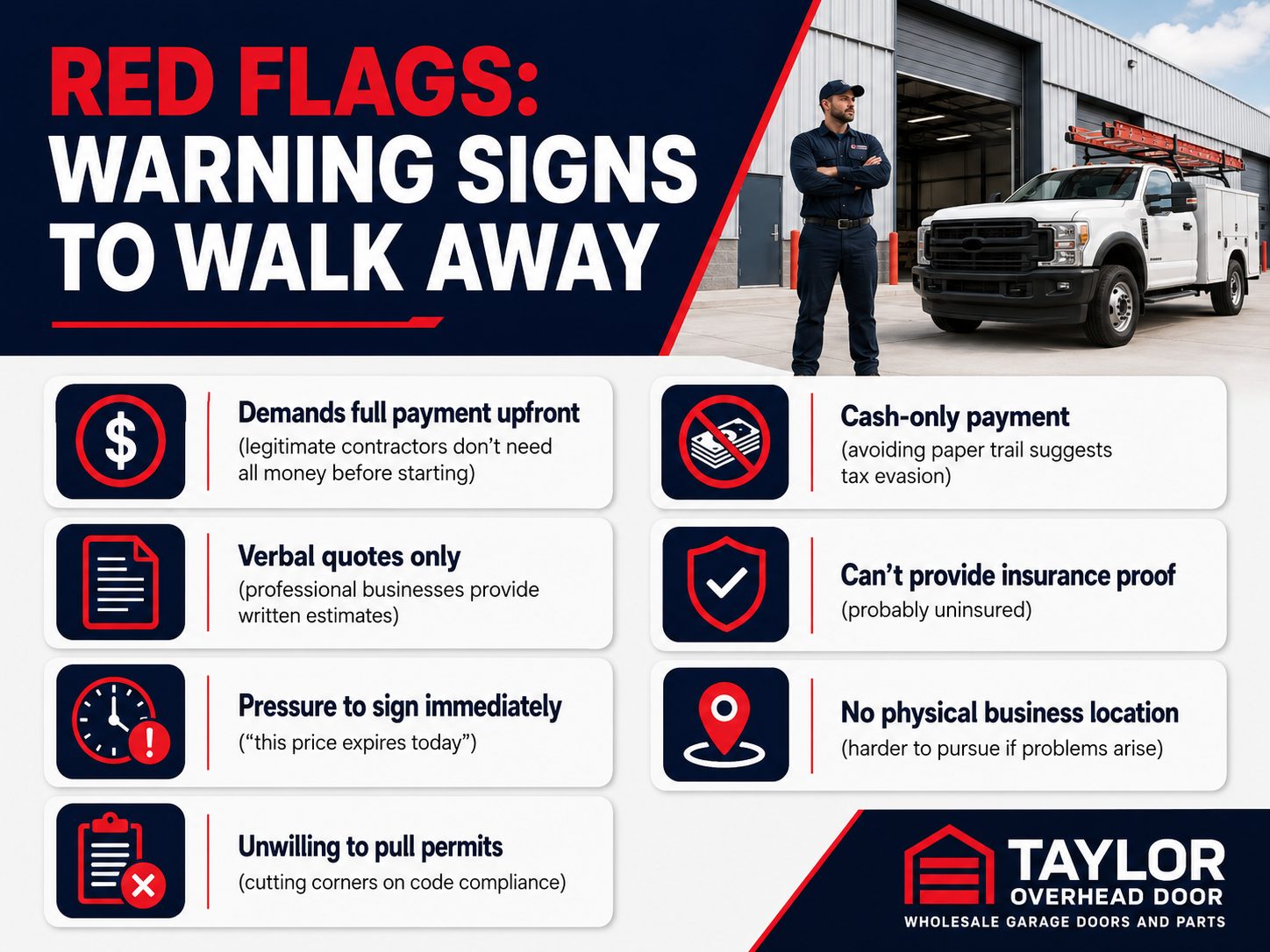
Red Flags: Warning Signs to Walk Away
Warning sign list with explanations:
• Demands full payment upfront (legitimate contractors don’t need all money before starting)
• Cash-only payment (avoiding paper trail suggests tax evasion)
• Verbal quotes only (professional businesses provide written estimates)
• Can’t provide insurance proof (probably uninsured)
• Pressure to sign immediately (“this price expires today”)
• No physical business location (harder to pursue if problems arise)
• Unwilling to pull permits (cutting corners on code compliance)
Quote Comparison Worksheet
Side-by-side comparison template for 3 quotes:
• Total price breakdown (materials vs labor)
• Door specifications (brand, model, insulation R-value, gauge)
• Opener details (brand, horsepower, belt vs chain, smart features)
• Spring rating (cycle count)
• Warranty coverage (manufacturer and installation)
• Installation timeline (order to completion)
• Service availability (emergency response, maintenance programs)

Understanding Your Written Estimate
Annotated sample estimate showing what each section means:
• Product specifications (exact model numbers, not vague descriptions)
• Labor itemization (installation vs disposal vs extras)
• Timeline commitments (start date, completion date)
• Payment terms (deposit amount, when final payment due)
• Warranty information (what’s covered, for how long)
• Change order process (how additional work gets approved and priced)
Reference Check Question Template
Specific questions to ask previous customers:
• Did they complete the job on schedule?
• Were there any surprise charges beyond the original quote?
• How thorough was the cleanup and disposal?
• Did anything break or fail in the first year?
• How responsive were they to warranty issues?
• Would you hire them again for another project?

Timeline: From First Contact to Completed Installation
Typical project timeline for residential installation:
Week 1: Initial consultations, get 3 quotes, verify credentials
Week 2: Check references, compare quotes, make decision, sign contract
Week 3-4: Product ordered and shipped to contractor
Week 5: Installation day (3-5 hours for typical residential)
Note: Custom doors or commercial projects may extend timeline to 6-8 weeks total
Don’t Hire Before Reading the Full Guide
Visit Overhead Garage Door Supply in Dallas-Fort Worth (DFW), Texas: Complete Guide to make a confident decision.